Category: Planning and procurement

  • Free advice, overseas shopping and the real cost of saving 20%

    Free advice, overseas shopping and the real cost of saving 20%

    Here is a story that repeats itself. A client calls us. We visit the site, meet them a few times, write an assessment report, advise on options, and prepare a design and a bill of quantities. None of this is charged. Then we hear: “Your solution is too expensive.” The client takes our list and sources the items from Dubai or China.

    I understand the wish to save money. But this approach usually ends badly, and I want to explain why.

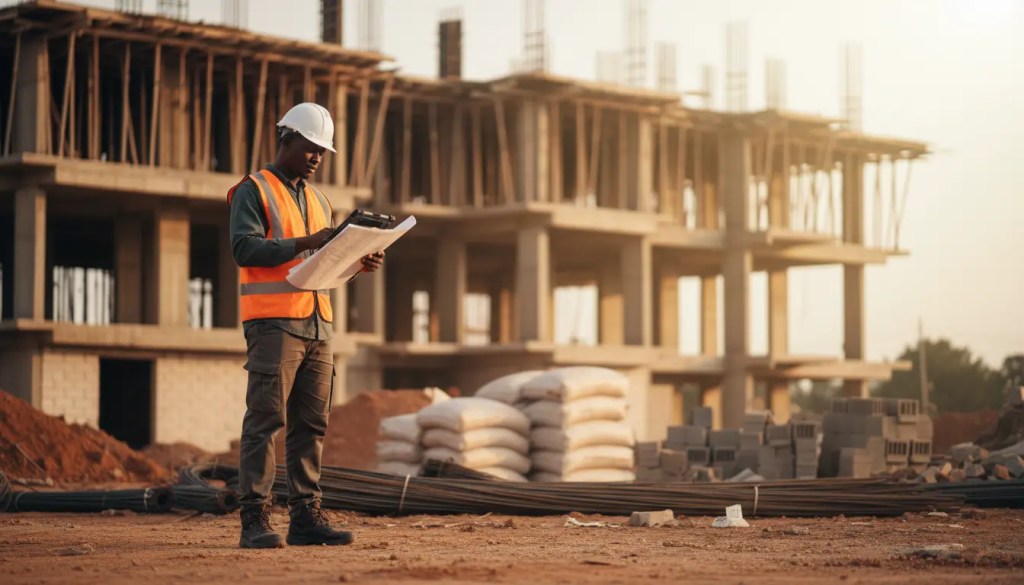
    Engineer reviewing drawings on a building site
    Site surveys, meetings and design take days of skilled work. In many projects the client never pays for them.

    What you buy abroad is often not what we specified

    A model name is not the whole specification. The same product can come in regional versions with different power supplies, plugs, firmware, licences, accessories and, for wireless products, frequency bands. A small change in a part number can mean a different product. Items that work as a system, like a DSP, its microphones, its control panel and its software licence, need to match exactly.

    When a client buys one item here and another item there, what arrives is often close to the design, but not the same. And close is not good enough for a system that has to work on the first day of the conference.

    Why we no longer hand over full designs for free

    Because of this, we changed how we work. Today our reports are correct in principle, but we do not release the full BOQ, drawings and settings until we are engaged. If a client uses our free advice and then buys elsewhere, they will not have the detail they need to make the system work, and the result will not be what we budgeted and planned. That is not to punish anyone. It is to protect the client from a half-copied design, and to protect the work of our team.

    Comparing the online price with the local price

    Many people compare a price on a foreign website with a quote in Kampala. That is not a fair comparison. The local price includes things the website does not show.

    Chart showing how freight, inspection, duty, VAT and levies add to an online price
    How an online price grows on the way to Kampala. The proportions are an illustration, not a quote.
    • Freight and insurance to Uganda.
    • Pre-export inspection (PVOC) for regulated goods.
    • Import duty, which under the East African Community common external tariff is 25% for most finished goods.
    • VAT at 18%, calculated on the value including duty.
    • Infrastructure levy and withholding tax on imports.
    • Clearing, handling and local transport.

    On top of that, AV and ICT items are sometimes classified under a higher tax code than they should be, and the importer pays more than the formula says. An official distributor imports regularly, knows the correct classification and pays all of this properly. A one-off importer often finds out the real cost only at the border.

    Warranty and support do not travel with the box

    Even when a client imports the exact brand and model we specified, local warranty and support are not automatic. Manufacturer warranties are usually tied to the region where the product was sold and to authorised channels. The local partner has no obligation to support a product that did not come through them, and the supplier abroad will rarely support an item in a country it was never meant to go to.

    Let me give an example. A client has a 50,000 dollar system and tries to save 20%, which is 10,000 dollars, by importing it. A few months later a power surge damages a key unit. With a local warranty, it is our problem and we replace or repair it. With an imported unit, it is the client’s loss: shipping it back, waiting, maybe paying for a new one. Power problems are common here, so this is not a rare case. The 10,000 dollars saved can disappear in a single fault.

    A word to procurement teams

    • Value the advice, surveys, design and support of the local team as part of the price. They are a service, even when they are not on the invoice.
    • Compare like with like: same model, same region, same warranty, delivered and installed in Uganda.
    • Ask who will support the system in year two and year five, and who holds spare parts.
    • If you want a design you can tender freely, pay for the design as a consultancy. Then everyone bids on the same thing.

    Price matters. But the right solution is rarely just the lowest number on a spreadsheet. Support the local team that advised you, even if the cost is a little higher. In the end it costs less.

    If you want an honest assessment and a design that will be supported locally, Talk to us at PRO AV Africa or message me on WhatsApp.

    References

    Chart: Boaz Shani.

  • Why AV is never planned in time, and what it costs you

    Why AV is never planned in time, and what it costs you

    Almost every week I walk into a building that is nearly finished and hear the same sentence: “Now we need the sound system, but the money is finished.” It might be a church that took ten years to build, a new office block, or a beautiful family home. The cement, bricks, tiles and furniture were all planned and paid for. The technology was not.

    This is not a Uganda problem only. AV consultants and integrators all over the world complain about it. But here the gap is bigger, and the people who pay for it are the owners.

    Church service with stage lighting and screens
    A modern church depends on sound, video and lighting as much as on its walls.

    The story I keep hearing

    A church committee spends three to four billion shillings on construction. When the building is almost done, they call us and say they have UGX 100 to 300 million for AV. They want clear sound for every seat, screens the back rows can read, live streaming for members abroad, and a system that will last for years. In other words, they want the best.

    At today’s exchange rate of roughly UGX 4,200 to 4,500 to the US dollar, UGX 100 million is about $23,000 and UGX 300 million is about $70,000. The building itself cost somewhere around $700,000 to $900,000. So the AV is being squeezed into 3% to 10% of the project, and only because that is what was left over.

    Homes are the same. A house with marble floors and imported light fittings ends up with a soundbar under the TV, because by the time anyone thinks about music, cinema or Wi-Fi in every room, the walls are plastered and the budget is gone. In most homes, even networking is not planned.

    Offices and boardrooms follow the same pattern. A meeting room for $10,000 to $20,000, including the screens, cameras, microphones and control, is called expensive. Yet the same company spent more than that on the furniture and finishes in that room.

    What the rest of the world budgets

    In church projects abroad, technology is planned as part of the building, not as an extra. One long-time church AV consultant writing for rAVe suggests setting aside about 8% of the construction budget for a basic system, 12% to 15% for a solid one, and 20% to 22% for a venue that does serious production. Church AV specialists in the US quote a full system at roughly $1,000 to $1,500 per seat, and give the example of a 200-seat church targeting about $250,000 for AV.

    Put that next to our numbers. A church that spent $800,000 on its building and offers $25,000 for AV is not being careful with money. It is setting itself up for a system that will disappoint everyone who sits in that hall. And when we propose a $400,000 system for a large cathedral, that is still modest by international standards. We do not design with the most expensive brands in the world. We design with brands that are sold and supported here in Uganda, because a system is only as good as its after-sales and local support.

    Building under construction with a crane
    The cheapest time to plan AV is while the structure is still going up.

    Why AV is never planned in time

    After many years of doing this, I think it comes down to a few simple reasons.

    • It is not in the drawings. Architects and quantity surveyors work with the trades they know: structure, plumbing, electrical, sometimes networking. AV has no line in the BOQ, so it has no money.
    • People think AV is equipment, not infrastructure. They imagine buying speakers and a TV at the end, like furniture. In reality AV needs conduits, cable routes, power at the right places, fixing points in the structure, a rack position and good acoustics. Those belong to construction.
    • Nobody owns it. There is an architect, a structural engineer and an electrical consultant, but rarely an AV consultant. The electrical engineer adds a few sockets and the subject is closed.
    • Shop prices set the expectation. Owners compare a professional system with the price of a TV or a party speaker in town, so any real design looks expensive.
    • The contingency is gone. Every building runs over somewhere. By the end, the extra money has been used on the structure and finishes, and technology is the easiest thing to cut.

    What it costs you to do it late

    Leaving AV to the end does not save money. It moves the cost and usually adds to it.

    • Walls and ceilings are opened again to run cables, or ugly surface trunking is fixed on new paint.
    • Speakers and screens go where they can be mounted, not where they work best, because there are no fixing points or power.
    • A hall full of hard surfaces turns out to have echo, and fixing acoustics after the finishes are done costs far more than planning it with the architect.
    • The system is cut down to fit the leftover budget, so the owner ends up with a building that looks finished but does not work for its purpose.

    US church AV designers estimate that infrastructure alone, meaning racks, conduit, cabling, power and installation work, often takes 20% to 25% of the AV budget on a new build. That part is cheap while the walls are open and expensive once they are closed.

    Sound engineer working at an audio mixing console
    The visible equipment is only part of the job. Cabling, power and acoustics come first.

    “Your design is too expensive”

    I hear this often, and I understand it. When the money is already spent, any number looks too big. But the price was never the problem. The problem is that the number arrived late.

    A good boardroom at $10,000 to $20,000 will be used every working day for many years. A church sound system serves every service, every wedding and every funeral for ten years or more. Spread over its life, AV is one of the cheapest parts of the building, and it is the part people actually experience. Nobody leaves a service talking about the bricks. They talk about whether they could hear the sermon.

    Conference room with a large screen and table
    A well planned meeting room is used every working day.

    What to do instead

    Whether you are an architect, a building committee, a developer or a family building a home, these steps will save you money and frustration.

    1. Bring in an AV consultant at the design stage, when the room sizes, seating and use are known. Not when the painters arrive.
    2. Put an AV line in the budget from day one. For churches and halls, use the international guide above as a starting point. For offices and homes, ask for an early estimate before the BOQ is final.
    3. Get AV on the drawings. Conduits, back boxes, cable routes, power, data points and the rack position should appear on the electrical and architectural drawings.
    4. Plan the acoustics with the architect. The shape and finishes of a room decide how good the sound can ever be.
    5. If money is short, build the infrastructure now and add equipment later. Pipes and cables in the walls cost little during construction. Speakers, screens and cameras can follow in phases.
    6. Budget for training and support, so the people who use the system every week can run it with confidence.
    Living room with a large wall mounted TV
    In homes, cinema, music and Wi-Fi in every room start with cables planned before plastering.

    A simple ask

    Treat technology like electricity: plan it, draw it, budget it and build it with the building. You would never finish a church and then ask how to bring in power. Sound, video and control deserve the same respect, because today they are how people experience the space.

    If you are planning a church, an office, a hall or a home and want to get AV right from the start, talk to us at PRO AV Africa or message me on WhatsApp. The earlier we talk, the more we can do with your budget.

    References

    Photos: Unsplash. Exchange rate approximate at the time of writing.